
 EN
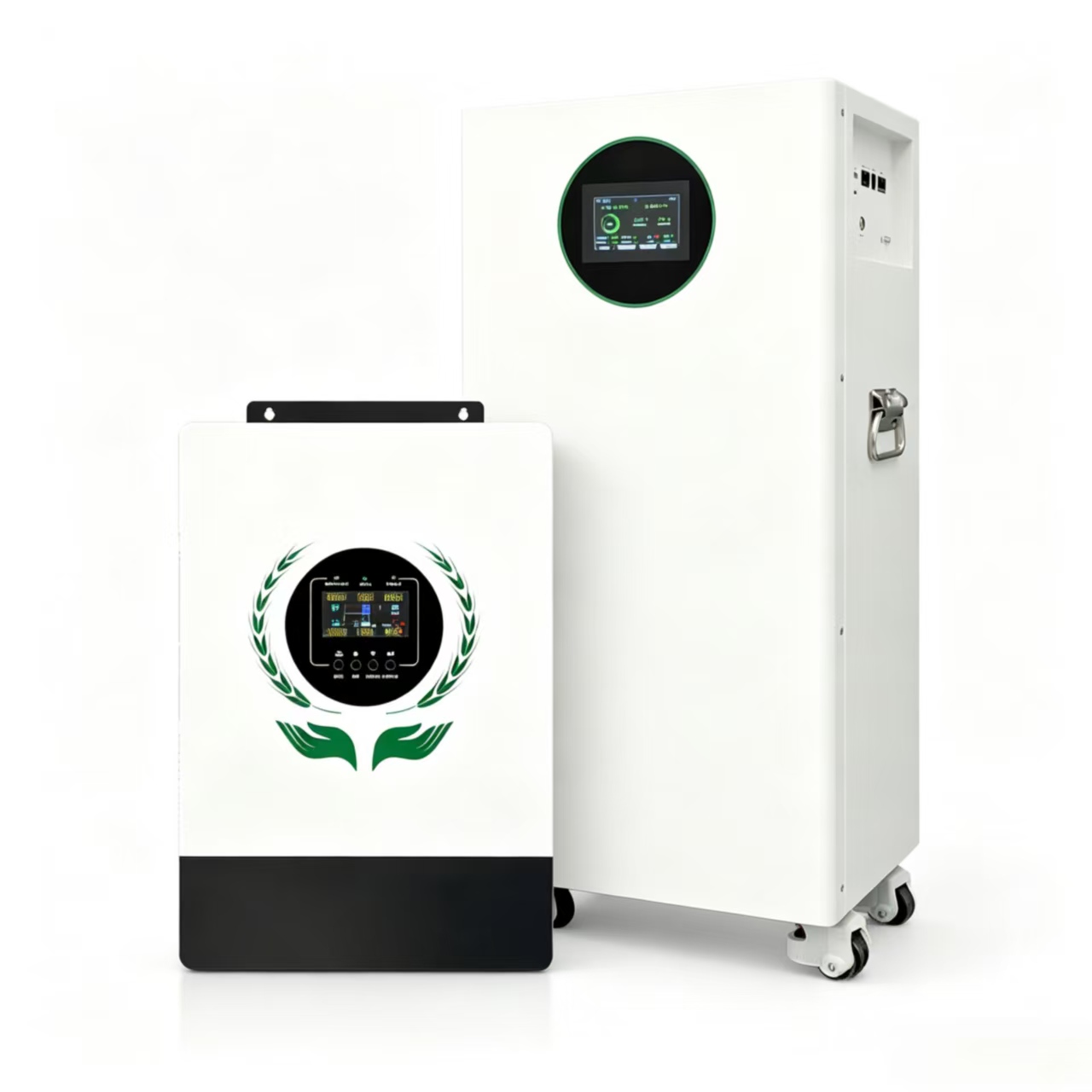
The Heart and Granary of Solar Storage
Many people have heard of solar-plus-storage, but few clearly understand what the inverter and the battery actually do.
Simply put: Solar panels collect sunlight and generate electricity. The inverter is the “power command center” of the whole system. The battery is the large-scale energy granary.
Only when the two work together can unstable solar energy be converted into reliable, safe, and usable electricity for the home.
Today, we will break down these two core components in plain language, explain the underlying logic of solar-plus-storage systems, and help you avoid common selection pitfalls.
1. Inverter: The Power Command Center of Solar Storage
Household outlets deliver alternating current, or AC. Appliances such as refrigerators, fans, lighting, and televisions all run on AC.
However, solar panels and storage batteries produce and store direct current, or DC. DC cannot be used directly by household appliances. That is why the inverter exists: it converts DC into AC, and AC back to DC as needed.
Many people think an inverter is just a simple “current converter.” But modern hybrid inverters do much more than that.
What a Hybrid Inverter Does
- MPPT – Maximum Power Point Tracking The inverter includes an MPPT module that tracks the real-time output of the solar panels. When sunlight changes in strength, it captures the maximum available power and improves solar utilization.
- Bi-directional Power Flow Control During the day, solar panels generate DC power. Part of it is used directly by home appliances. Any excess power is regulated by the inverter and stored in the battery. In the evening or on cloudy days, the battery outputs DC power, and the inverter converts it back into clean, stable AC power for the home.
- Safety Protection and Mode Switching When the grid is available, the system can work in grid-connected mode. If the grid fails, a qualified hybrid inverter can quickly switch to off-grid backup mode, so the battery continues to supply critical loads.
- Pure Sine Wave Output A high-quality inverter provides pure sine wave output, similar to grid power. This protects sensitive electronics such as TVs and computers. Low-quality modified sine wave inverters, by contrast, can cause voltage fluctuations and equipment damage.
Main Types of Inverters
表格
| Type | Characteristics | Best For |
|---|---|---|
| Grid-tie Inverter | Works only when the grid is present; stops during outages | Grid-connected homes without backup needs |
| Off-grid Inverter | Operates independently of the grid; works with batteries | Remote areas or unstable grid locations |
| Hybrid Inverter | Supports both grid-tie and off-grid modes; can switch to battery backup | Most home energy storage projects |
The hybrid inverter is currently the mainstream choice for residential solar storage.
2. Battery: The Energy Granary for Solar Power
If the inverter is the heart of the system, the battery is the energy warehouse.
Solar generation usually peaks during the day, but household consumption often peaks in the evening and at night. Without a battery, excess solar energy would simply go to waste. The battery stores that surplus energy and releases it when needed.
LiFePO4 Batteries Are the Current Mainstream
The most common technology in modern residential storage is lithium iron phosphate battery, often written as LiFePO4.
Compared with older lead-acid batteries, LiFePO4 offers important advantages:
- Better chemical stability
- Better heat resistance
- Lower risk of thermal runaway
- Longer cycle life, typically 6,000 cycles or more
- Higher discharge depth
- Higher energy conversion efficiency
- Lower charge-discharge losses
Lead-acid batteries, by comparison, have shorter lifespans, usually only 3–5 years, and are not well suited for deep cycling. They are therefore rarely used in new residential storage projects today.
BMS: The Battery Safety Manager
Every storage battery system includes a Battery Management System, or BMS. Think of it as the battery’s safety manager.
A battery pack is made up of many cells connected in series. Small differences in voltage between cells are normal, but if left unbalanced, they can reduce performance and create safety risks.
The BMS continuously monitors:
- Cell voltage
- Current
- Temperature
- State of charge, or SOC
It also performs active or passive cell balancing and provides protection against:
- Overcharging
- Over-discharging
- Over-current
- High temperature
- Low temperature
If an abnormality occurs, the BMS can disconnect the circuit to prevent damage. Without BMS protection, a battery pack may suffer cell imbalance, swelling, or even safety incidents.
3. Inverter and Battery Must Be Properly Matched
The inverter and battery are not simply plugged together. They must communicate and cooperate correctly.
The inverter reads real-time data from the battery BMS, including:
- Remaining battery capacity, or SOC
- Battery temperature
- Maximum charge current
- Maximum discharge current
Based on this information, the inverter dynamically adjusts the charging power.
When the battery is full, the inverter stops charging. When the battery reaches the lower protection limit, the inverter stops discharging. This protects the battery from over-discharge and extends its service life.
Communication Compatibility Is Critical
If the inverter and battery do not share a compatible communication protocol, serious problems can occur, including:
- Uncontrolled charging
- Failure of protection functions
- Shortened battery lifespan
- Increased safety risks
For this reason, it is usually safer to select a complete, natively compatible system rather than mixing different brands arbitrarily.
4. Common Selection Mistakes to Avoid
Mistake 1: Assuming a Bigger Battery Is Always Better
Battery capacity must match both the solar array size and household electricity consumption.
If the solar array is relatively small, there may not be enough surplus energy during the day to charge a large battery. In that case, a bigger battery will only increase cost without delivering proportionally more value.
Mistake 2: Choosing Inverter Power Randomly
The inverter’s rated output power determines how many appliances can run at the same time.
High-power devices such as air conditioners and water pumps often have startup surges. If the inverter power is too small, these surges may trigger protection shutdowns.
Mistake 3: Ignoring the Installation Environment
Both the inverter and the battery require good ventilation and cooling.
A closed, high-temperature environment will accelerate aging and shorten service life. A humid environment may also corrode wiring and affect long-term reliability.
5. What Value Can a Solar Storage System Deliver?
A well-designed solar-plus-storage system can provide practical benefits:
- Lower electricity bills in regions with high grid tariffs
- Backup power during outages, especially for lighting, refrigeration, and communication equipment
- Long-term clean energy use by increasing self-consumption of solar power
- Reduced reliance on fossil fuels and lower household carbon emissions
That said, solar storage is not completely maintenance-free.
Basic maintenance includes:
- Checking status indicators regularly
- Listening for unusual noise
- Monitoring for overheating
- Inspecting terminals periodically
- Keeping equipment clean, dry, and ventilated
- Never disassembling the inverter or battery without professional training
With proper selection, professional installation, and routine maintenance, an inverter and battery system can operate reliably for many years.
Summary
The inverter is responsible for:
- DC/AC conversion
- Energy scheduling
- Mode switching
- System protection
The battery is responsible for:
- Storing excess solar energy
- Delivering electricity when needed
- Protecting cells through the BMS
Together, they form a complete residential solar-plus-storage system.
Choosing a well-matched inverter and battery combination is essential for safety, stability, and long service life. Only then can sunlight become reliable household electricity.
If you are planning a home storage project, start by evaluating your rooftop solar capacity and daily load profile. Then size the inverter power and battery capacity accordingly.