
 EN
EN
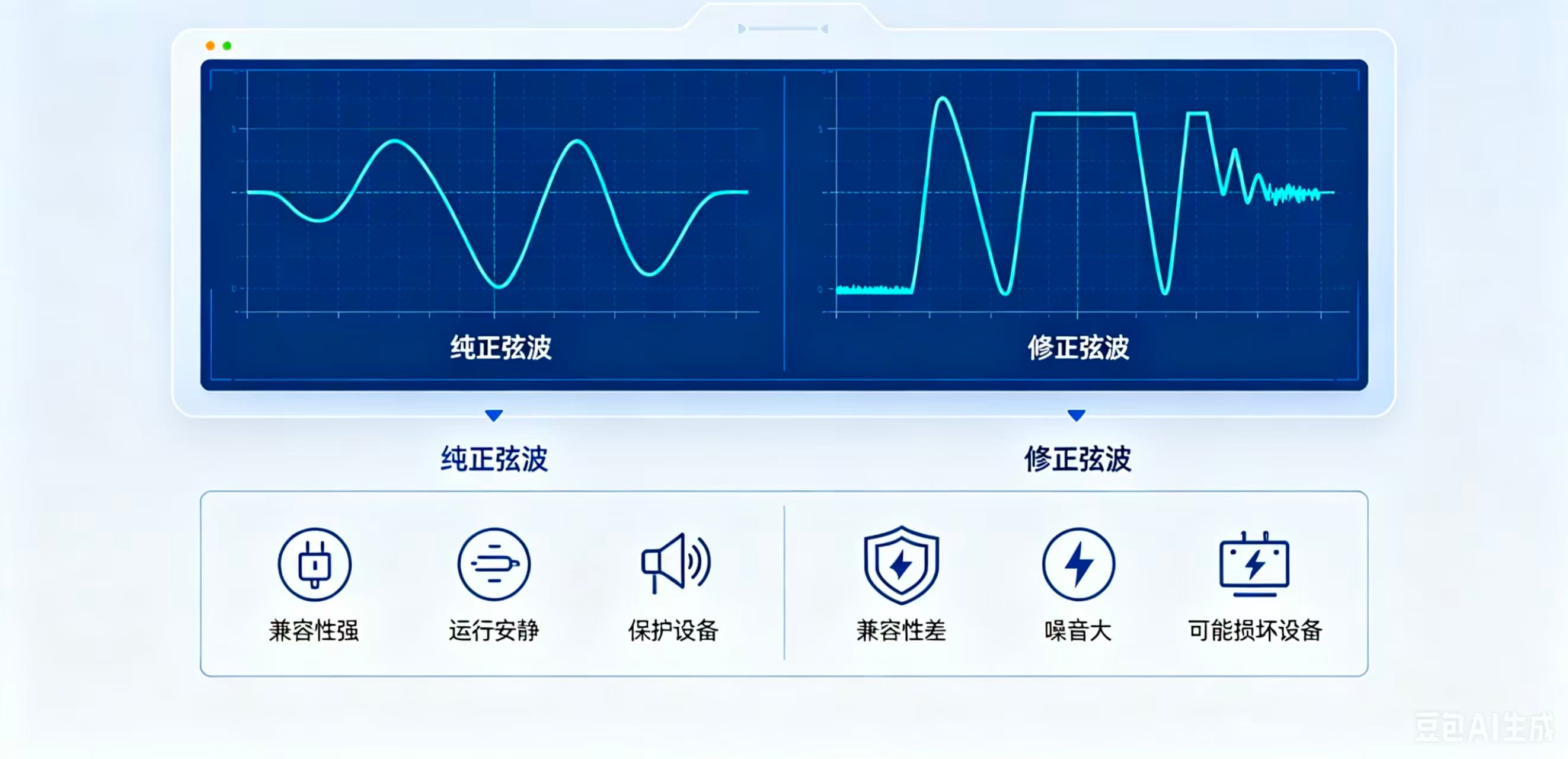
Comprehensive Guide to Solar Inverters: Working Principles, Waveform Comparison & 48V Mainstream Model Selection
1. What Is a Solar Inverter? The Indispensable Core of PV Systems
Solar panels generate direct current (DC) during operation, while daily household appliances, lighting fixtures, motors and other electrical loads all run on alternating current (AC). The solar inverter acts as the core device to convert DC to AC, serving as the heart of any complete PV energy storage system.
Matched with solar modules and energy storage batteries, inverters build fully functional off-grid or grid-tied power supply solutions. They are widely deployed for residential self-consumption, remote villages, outdoor camps, small industrial and mining sites, and other locations with no grid access or unstable power supply. A high-quality inverter delivers efficient current conversion, while integrating solar charging, voltage stabilization, and multi-layer protection against overload, short circuit and overheating. It safeguards all electrical equipment and power supply safety, making it an irreplaceable component for PV energy storage projects.
2. Pure Sine Wave vs Modified Sine Wave Inverters: More Than Just Waveform Differences
Two mainstream inverter types dominate the market, distinguished by their output waveforms, with stark gaps in user experience, equipment compatibility and safety.
- Modified Sine Wave Inverter: Its output waveform deviates greatly from standard mains electricity, delivering unstable current. It only works with simple resistive loads such as light bulbs and electric furnaces. It generates loud operating noise and will easily damage motors, precision digital devices and refrigeration equipment under long-term use.
- Pure Sine Wave Inverter: Its output waveform is identical to standard municipal grid power, providing smooth, clean electric current. It boasts full compatibility with refrigerators, water pumps, air conditioners, electronic instruments and all other types of loads, featuring low operating noise, minimal power loss and far lower equipment failure rates.
Pure sine wave inverters are the safer, more durable top choice for regular households, centralized village power supply, and any scenario with mixed types of electrical appliances.
3. Full Breakdown of 48V Solar Inverters: Mainstream Models for Homes & Village Power Supply
Within the off-grid PV energy storage sector, 48V systems have become the global mainstream for residential use and centralized power supply in remote villages, thanks to high safety, broad compatibility and stable performance.
This series mainly comes in two power ratings: 3500W and 5000W, capable of meeting the daily electricity demands of a single household. Equipped with high-performance MPPT solar charge controllers, they support wide PV input voltage ranges, delivering fast charging speed and high solar energy utilization efficiency. Moreover, multiple units can be connected in parallel to flexibly expand total power capacity, enabling easy upgrades from single-household power supply to large-scale centralized power supply for village clusters.
With reliable build quality, high charging efficiency and flexible capacity expansion, high-power 48V solar inverters are widely recognized by overseas off-grid markets, standing as the primary equipment for PV energy storage projects in areas without municipal power grids.
2026-06-30